The regulatory landscape for forensic science in the UK is changing. With the publication of FSR-GUI-0006 Issue 2, Incident Scene Examination, forensic units must consider how they demonstrate competence, maintain effective quality assurance and prepare for the requirements of the statutory Code of Practice.
But what does this mean in practice for those responsible for leading and managing crime scene investigation teams?
The Forensic Training Partnership CIC has produced a new white paper to help forensic leaders understand the guidance, identify the key areas of responsibility and consider the practical steps required to support compliance.
Download our white paper to explore the key requirements and discover how your organisation can prepare for the forthcoming regulatory milestones.
Understanding FSR-GUI-0006 Issue 2
FSR-GUI-0006 Issue 2 provides guidance to support the implementation of the statutory Code of Practice for Incident Scene Examination (FSA – INC 100).
Forensic units must be able to demonstrate that their systems for competency, professional judgement, technical records, contamination management and quality assurance are effective and appropriately controlled.
For senior forensic leaders, this involves more than ensuring that staff have attended training courses. Organisations must establish and maintain appropriate competency frameworks, demonstrate real-world performance and retain responsibility for their own compliance arrangements.
Our white paper examines what these expectations mean for forensic units and their leadership teams.
What does the White Paper cover?
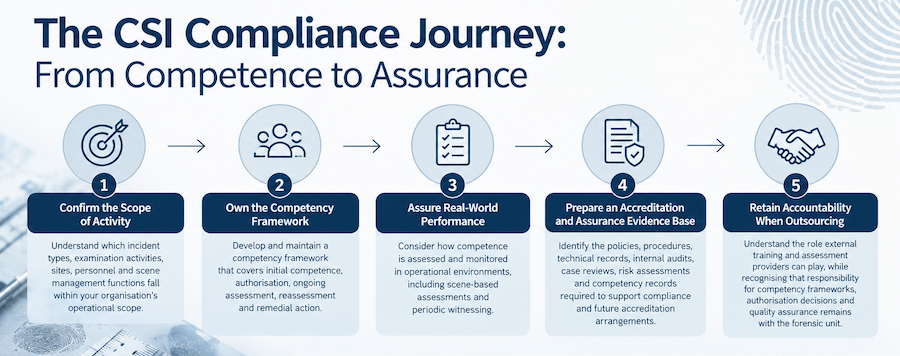
The publication identifies five key areas that CSI leaders should consider when preparing for incident scene examination compliance.
1. Confirm the scope of activity
Understand which incident types, examination activities, sites, personnel and scene management functions fall within your organisation's operational scope.
2. Own the competency framework
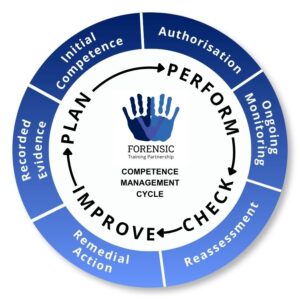
Develop and maintain a competency framework that addresses initial competence, authorisation, ongoing assessment, reassessment and remedial action.
3. Assure real-world performance
Consider how competence is assessed and monitored in operational environments, including the use of scene-based assessments and periodic witnessing.
4. Prepare an accreditation and assurance evidence base
Identify the policies, procedures, technical records, internal audits, case reviews, risk assessments and competency records required to support compliance and future accreditation arrangements.
5. Retain accountability when outsourcing
Understand the role external training and assessment providers can play, while recognising that responsibility for competency frameworks, authorisation decisions and quality assurance remains with the forensic unit.
Preparing for the 2027 regulatory milestones
FSR-GUI-0006 Issue 2 identifies important milestones for organisations working towards compliance with the Forensic Science Regulator's Code of Practice.
These include:
- 6 April 2027: Milestone 1 – a corporate competency framework covering the applicable minimum scope.
- 2 October 2027: Milestone 2 – a risk-based approach to anti-contamination and proportionate note-taking.
The white paper explores how forensic leaders can begin preparing for these requirements and consider the evidence their organisations will need to demonstrate.
How The Forensic Training Partnership can support your organisation
At The Forensic Training Partnership CIC, we understand the importance of developing and maintaining competence in forensic practice.
We design and deliver specialist forensic training, scenario-based learning and assessment support to help forensic units develop the competency arrangements expected under the Code of Practice and FSR-GUI-0006 Issue 2.
Our experience includes:
- Crime Scene Manager training using realistic, demanding scenarios.
- Simulated incident scene examinations and ongoing competency assessment.
- Specialist forensic photography and fingermark visualisation training.
- Professional discussion and scenario-based assessment exercises.
- Continuing Professional Development (CPD) workshops supporting specialist forensic skills.
Our approach focuses on practical application, professional judgement and the development of skills that can be applied in real operational environments.
External training can contribute to an organisation's competency and assurance evidence base. However, responsibility for compliance remains with the forensic unit and its leadership.
Download the White Paper
Whether you are a CSI manager, Crime Scene Manager, forensic science quality manager or senior forensic leader, this white paper provides a practical starting point for understanding the implications of FSR-GUI-0006 Issue 2.
Download the publication to explore the key requirements, consider your organisation's current arrangements and identify areas for further development.
White paper: FSR-GUI-0006 Issue 2: What CSI Leaders Must Do to Assure Incident Scene Examination Compliance
Authors: Martin Bloomfield, Tonja Fritz-Johnson and Sarah Thirkell
Published: 1 October 2026
Format: PDF
About The Forensic Training Partnership CIC
The Forensic Training Partnership is a not-for-profit Community Interest Company delivering specialist forensic training to police forces, forensic practitioners and security agencies.
Our focus is on providing high-quality, practical training that supports professional development, improves forensic capability and contributes to the wider forensic science community.
We work with experienced forensic practitioners and subject matter experts to deliver training tailored to the needs of individual organisations.
To discuss how FTP can support your organisation's forensic training, competency development or assessment requirements, [contact The Forensic Training Partnership].