
The Art of Investigation: Britta Jaschinski Wins Earth Photo 2026 for Wildlife Crime Forensics
Earth Photo 2026 has officially announced its winners, and for the professional forensic community, the top prize carries a significant message. The prestigious Earth Photo 2026 Award has been granted to photographer Britta Jaschinski for her haunting and rigorous project documenting the global illegal wildlife trade and the advanced forensic science being developed to dismantle it.
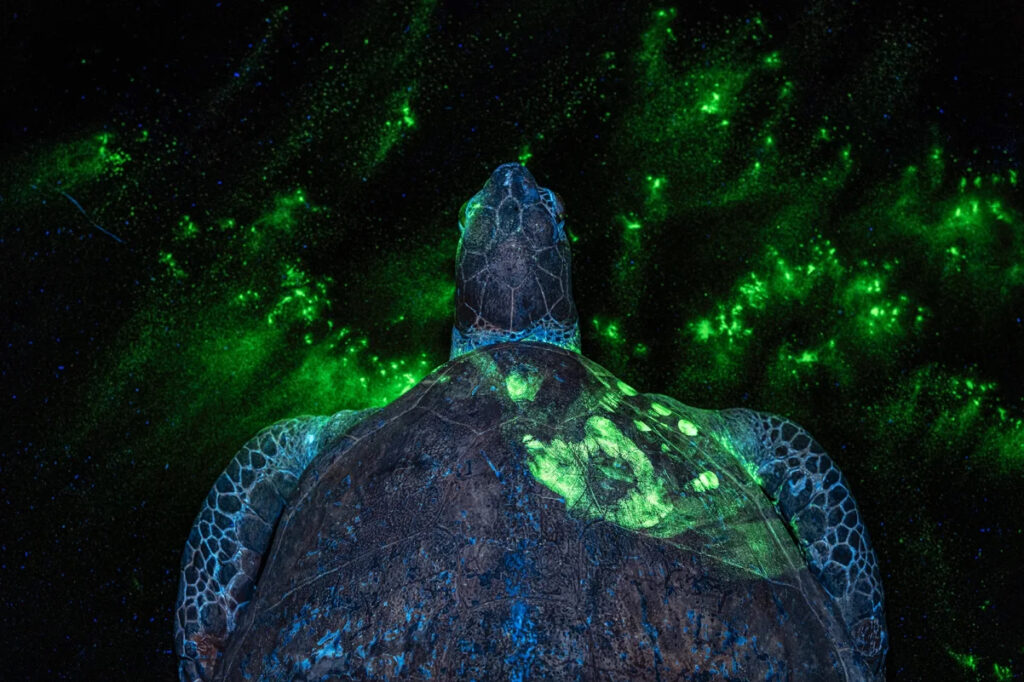
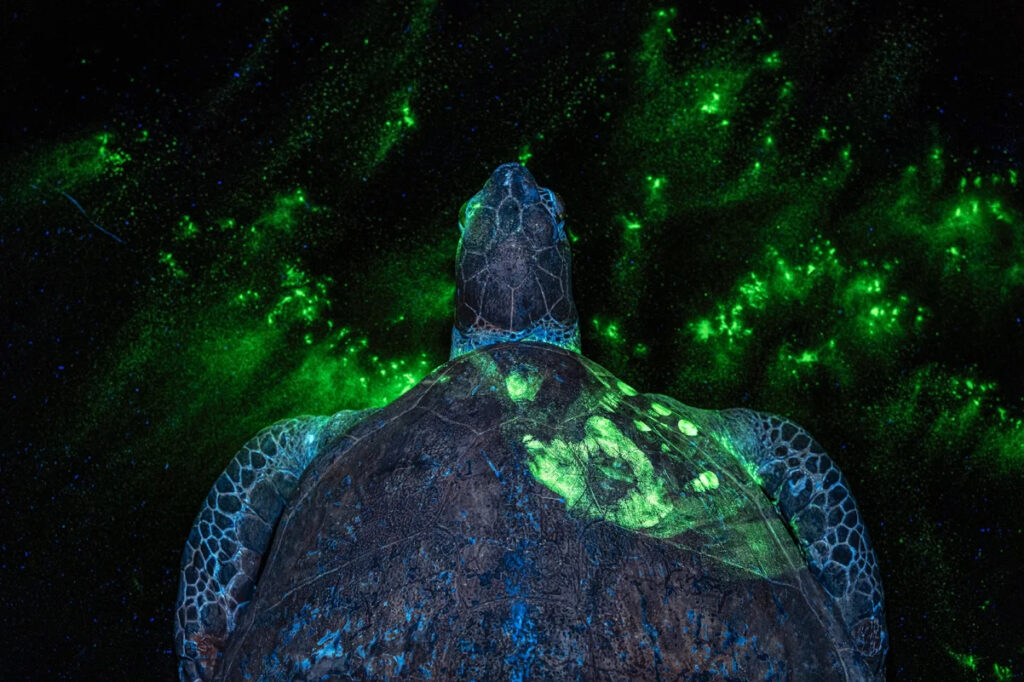
The most arresting photograph, featuring a dead green sea turtle, looks like a scene from a fluorescing coral reef. But look closer and you can see a handprint on the turtle’s shell, illuminated by special powder dye applied by a forensic expert. The turtle could be in its natural habitat but it’s not: it’s another victim.
“Seeing that level of forensic expertise applied to a turtle was both unexpected and extraordinary. Watching the team work felt almost like witnessing magic,” Jaschinski told CNN in an email. “What stayed with me most was the sense of hope, also because this can act as a deterrent. For too long, organised criminal networks have viewed wildlife trafficking as a low-risk, high-reward enterprise, with low conviction rates and relatively light penalties. As forensic science becomes more sophisticated, that equation is beginning to shift.”
Jaschinski’s work brings viewers into a hidden, high-stakes world where traditional investigative techniques meet the urgent needs of environmental conservation. Her project is not merely an aesthetic endeavour; it is a visual record of a criminal enterprise that is now estimated to be worth $23 billion a year.
Forensics on the Front Lines: From Heathrow to Hamburg
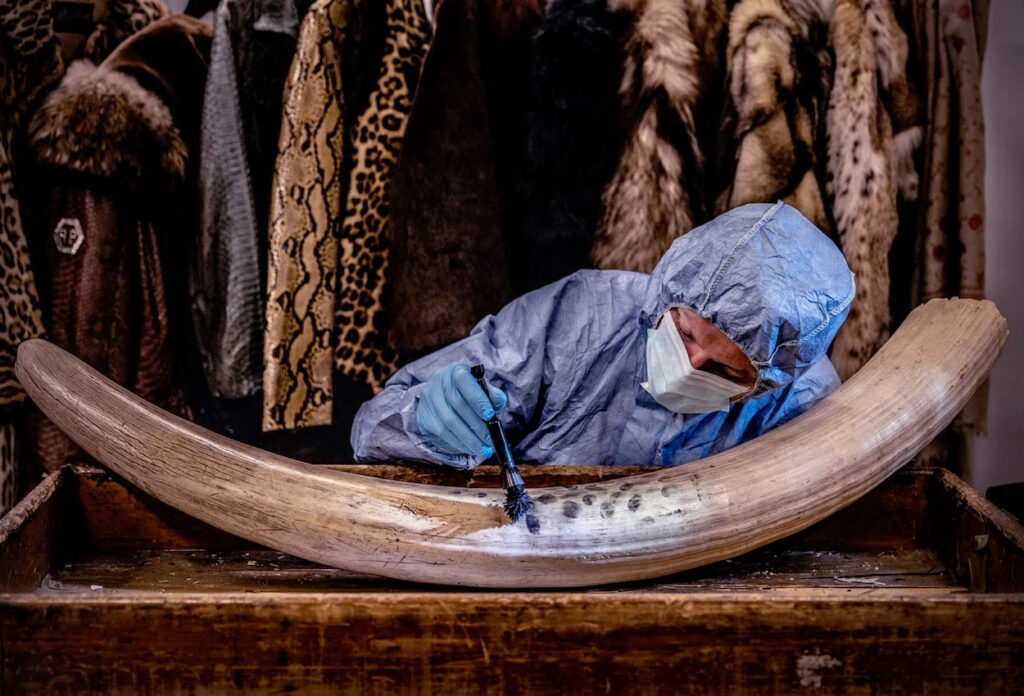
One of the most compelling aspects of Jaschinski’s winning portfolio is its focus on the procedural reality of wildlife crime investigation. Her photographs provide a rare look at the work of Metropolitan Police forensic investigators at Heathrow Airport, capturing the precise moment confiscated elephant tusks are dusted for fingerprints.
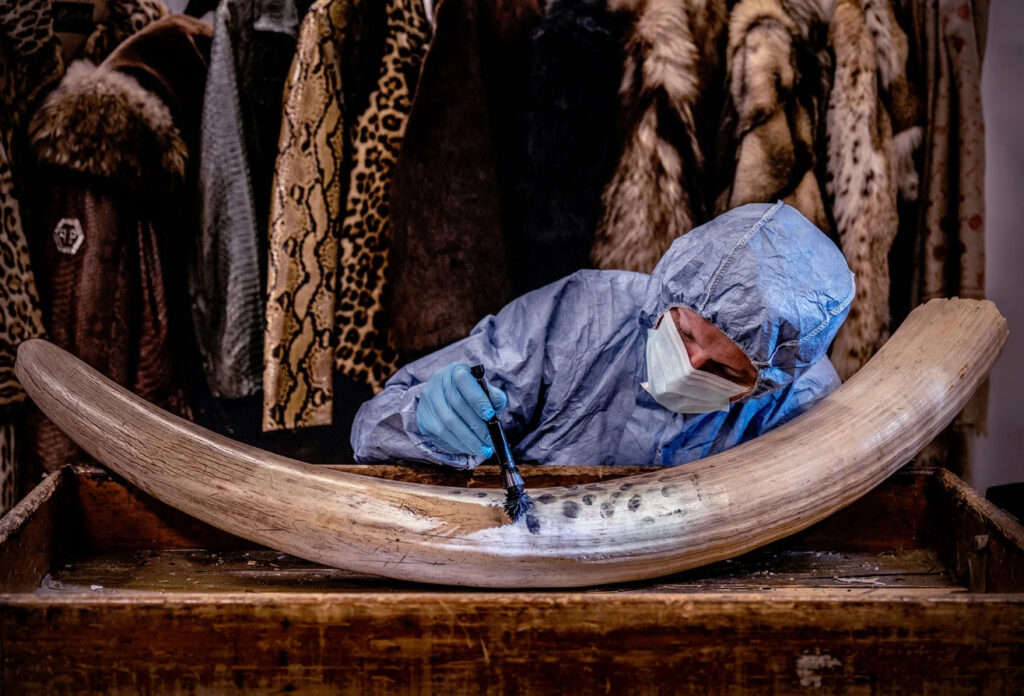
This image serves as a powerful reminder to the forensic community that our skills are increasingly being called upon to protect the world’s most vulnerable species. Whether it is latent print recovery on organic material or tracing the provenance of seized items, forensic science is the backbone of the legal battle against traffickers.
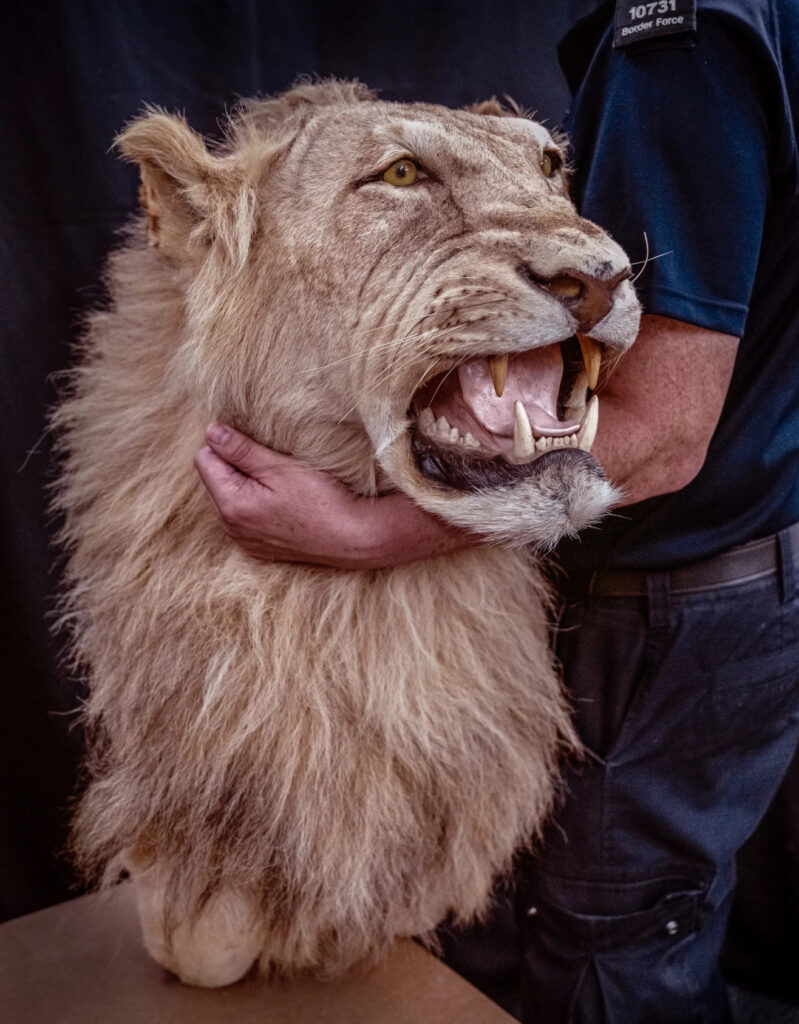
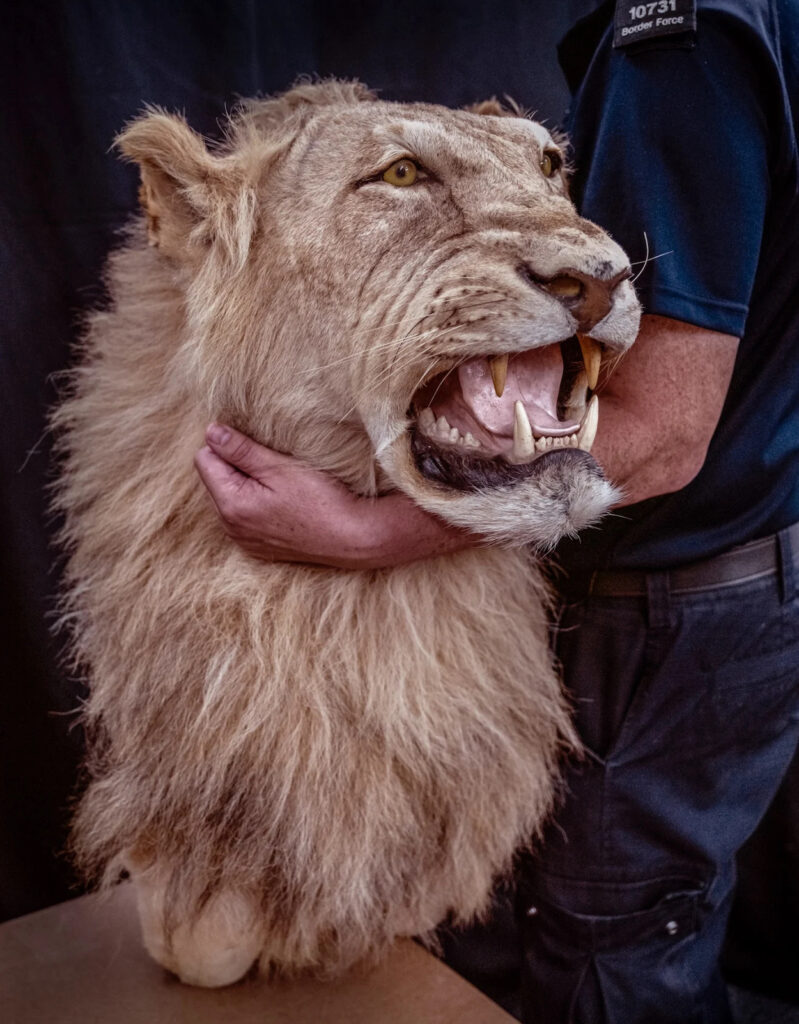
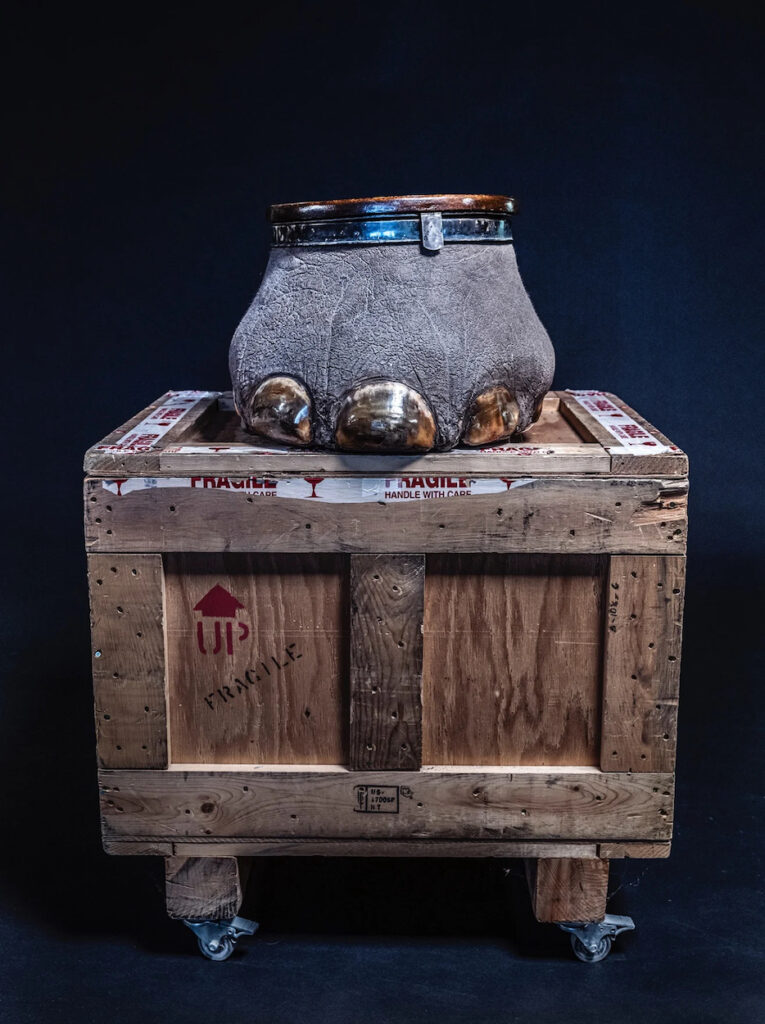
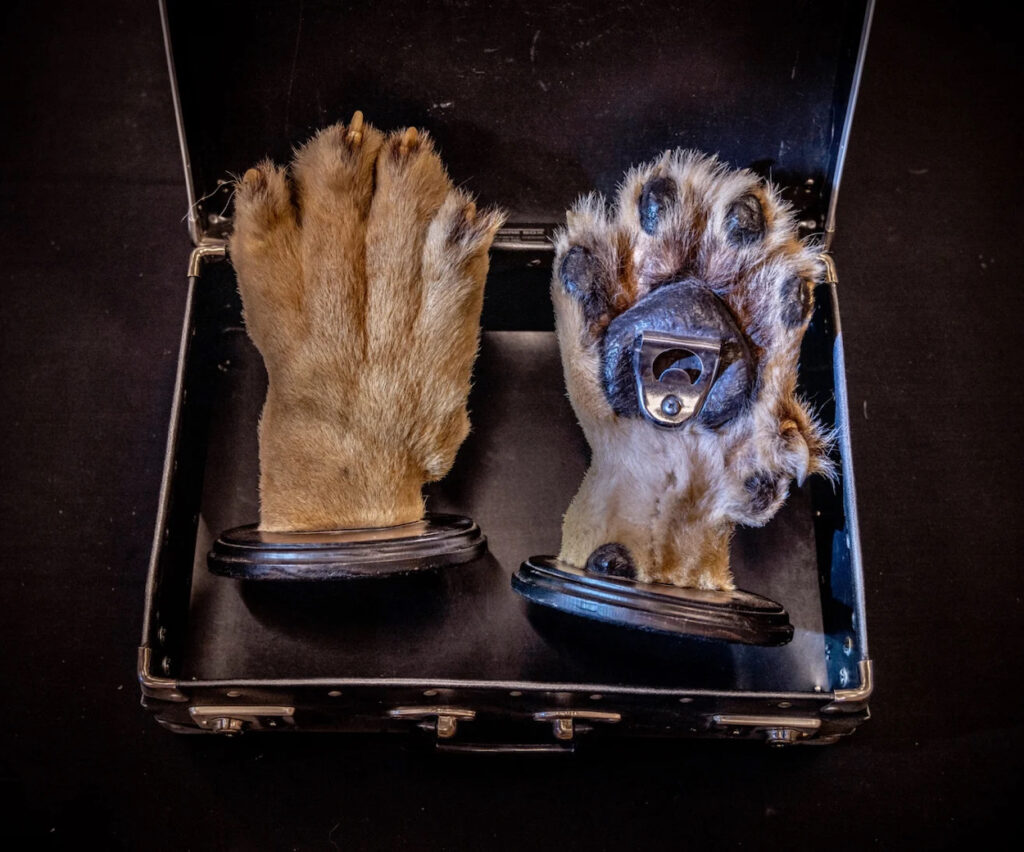
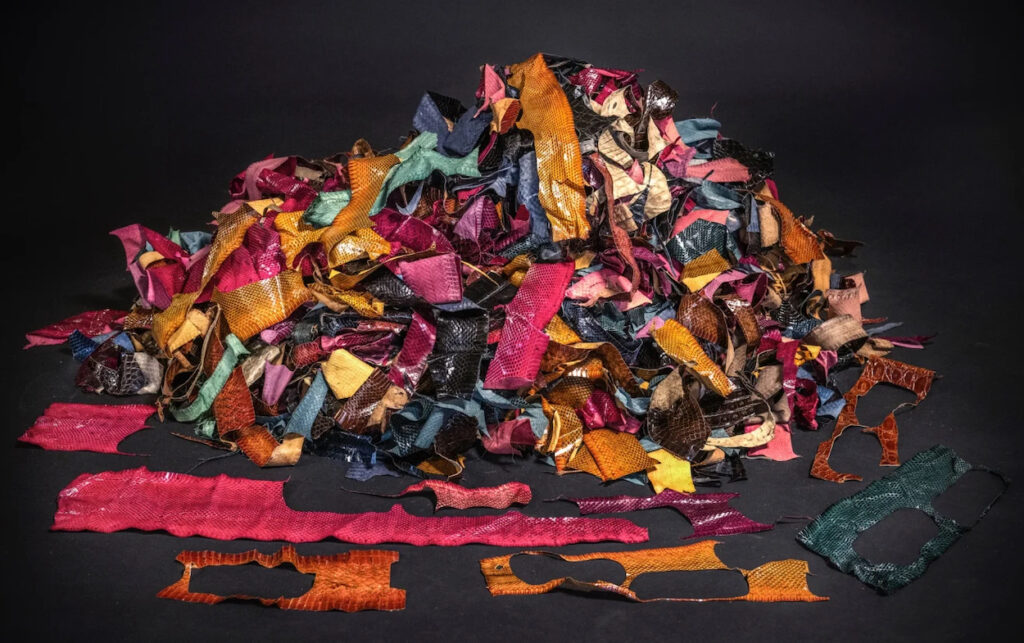
Jaschinski also worked closely with border force operations, customs investigators, and specialised wildlife crime units across the UK and Europe. Her lens documented evidence that is as surreal as it is devastating: lion paws repurposed as bottle openers and exotic reptile leathers seized during routine customs checks in Hamburg. By capturing these items with unflinching clarity, she transforms criminal evidence into provocative art, making the “scale and strangeness” of these crimes impossible for the public—or lawmakers—to ignore.
The Global Impact: Operation Thunder
The significance of Jaschinski’s work is underscored by the scale of international law enforcement efforts. The sources highlight the impact of Operation Thunder (2024)
a massive annual international operation coordinated across 138 countries. This initiative alone resulted in approximately 365 arrests and more than 2,213 seizures of protected animals and plants.
Jaschinski’s practice sits at the vital intersection of photojournalism and activism. She uses her camera as a tool for accountability, urging governments and the public toward meaningful action. For forensic professionals, her work validates the importance of the “chain of custody” and the meticulous documentation of evidence that leads to such high-profile international successes.
Why Visual Documentation Matters in Forensics
Louise Fedotov-Clements, Director of Photoworks and chair of the Earth Photo jury, noted that the 2026 winners were chosen because they “actively ask us to think about the world around us” and the ways the climate and biodiversity crises are affecting the globe.
For those of us at Forensic Training UK, Jaschinski’s recognition highlights a growing field of specialisation. As wildlife crime becomes more sophisticated, the demand for trained investigators who can apply forensic principles to non-human evidence will only increase. Jaschinski’s “unflinching imagery” provides the public face for the quiet, meticulous work performed in labs and at borders every day.
Visit the Exhibition
The Earth Photo 2026 exhibition is currently on display at the Royal Geographical Society in London until 26 July 2026. Following its London residency, the exhibition will tour various locations across the UK. We highly recommend that students and professionals in the forensic field visit the exhibition to see how the tools of our trade are being used to tell the most urgent stories of our time.
#ForensicScience #WildlifeCrime #EarthPhoto2026 #BrittaJaschinski #EnvironmentalForensics #ForensicTrainingUK #RGS
Reference Sources:
https://www.rgs.org/about-us/our-work/earth-photo/winners/2026
https://edition.cnn.com/science/earth-photo-2026-britta-jaschinsk-wildlife-trafficking-c2e-spc
https://www.parkerharris.co.uk
https://photoworks.org.uk/about
https://www.linkedin.com/in/britta-jaschinski-807512209
https://www.brittaphotography.com
https://www.wcoomd.org/en/media/newsroom/2025/february/operation-thunder-2024.aspx
https://www.gov.uk/government/news/crackdown-on-illegal-wildlife-products-at-the-border
All websites accessed 9 July 2026 Mb
