
UK Forensic Photography Standard: Why It Is Needed
UK forensic photography guidance is fragmented. This article examines the gaps in standards, validation, training, digital workflows and emerging imaging technologies.
The UK needs a clearer national framework for forensic photography. Existing guidance addresses important areas such as digital evidence handling, clinical injury photography and video-based evidence, but it does not provide one photography-specific standard covering capture, validation, processing, training, reporting and emerging technologies from end to end.
This matters because forensic photographs may influence investigative decisions, expert interpretation and court proceedings. Where organisations apply different local or discipline-specific procedures, the quality, consistency and auditability of photographic evidence may vary.
What guidance already exists?
The UK already has several important sources of guidance relevant to forensic photography. However, these documents were developed for different purposes, audiences and operational environments.
The Forensic Science Regulator’s statutory Code of Practice sets quality standard requirements for forensic science activities connected with the investigation of crime in England and Wales. Version 2 of the Code came into force on 2 October 2025. It provides an overarching quality framework covering areas such as competence, validation, quality management and control of data.
The Code is not, however, a complete operational manual for every type of forensic photography. Its requirements apply according to the forensic science activities designated by the Regulator, and the detail may differ between activity types.
The Digital Imaging and Multimedia Procedure provides an important framework for practitioners involved in the capture, retrieval, storage and use of evidential digital images, video, audio and associated data. It covers matters including transfer, storage, master and working copies, metadata, presentation, retention and disposal.
The ‘Photography in Custody and Sexual Assault Referral Centres guidelines’, commonly known as the PICS guidelines, provide valuable advice on clinical injury photography. They are primarily intended for healthcare professionals working in police custody and Sexual Assault Referral Centres [SARC’s], rather than for every practitioner involved in crime-scene, traffic or specialist forensic photography.
These documents each make an important contribution. The difficulty is that they do not currently form one clearly connected, photography-specific framework for all operational settings.
Where current guidance falls short
Fragmented coverage across disciplines
Forensic photography is used in many different contexts, including:
- crime-scene and incident-scene examination;
- custody and clinical injury documentation;
- sexual assault examinations;
- road traffic collision investigation;
- fire and explosion investigation;
- specialist comparison and interpretation;
- aerial and drone-based imaging;
- body-worn and other video systems; and
- digital extraction and computational imaging.
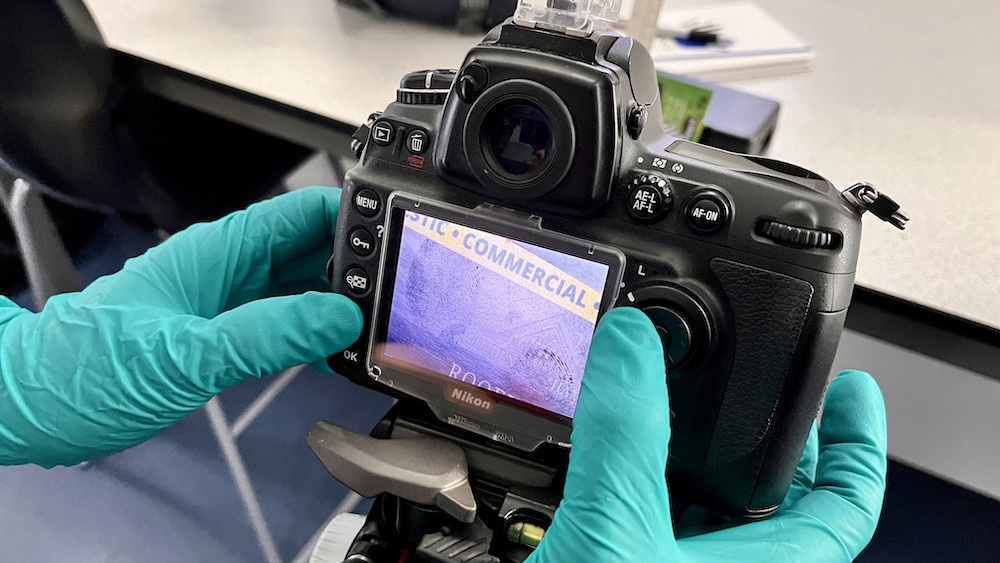
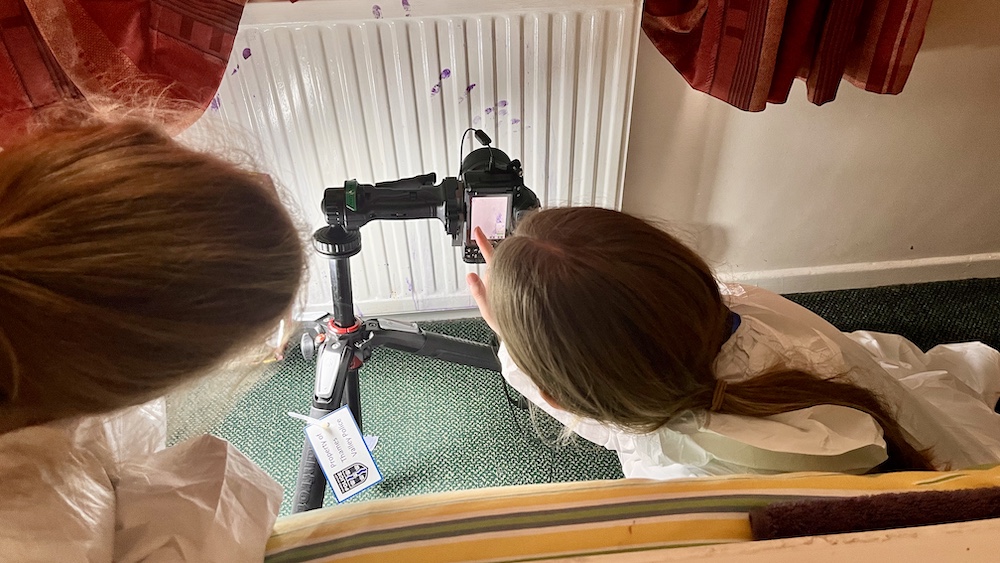
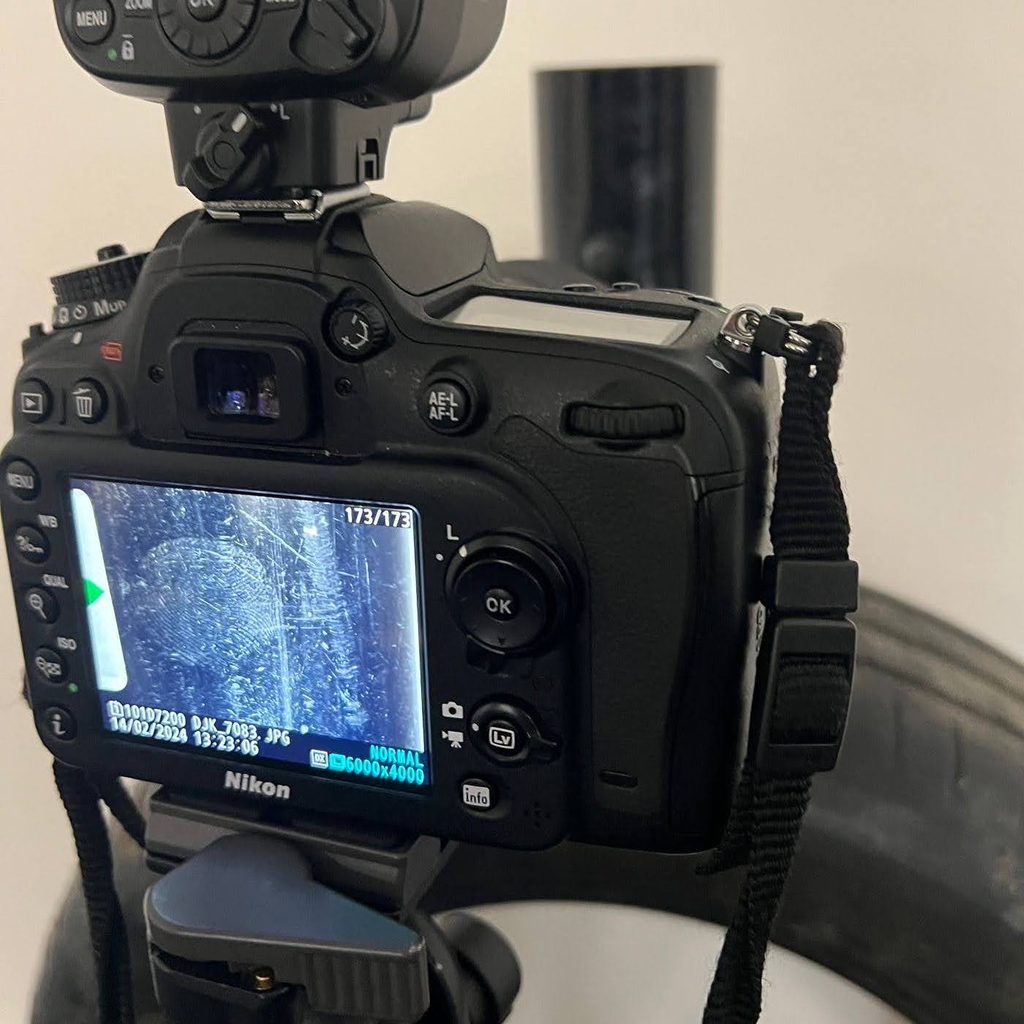
Each setting presents different technical, legal and ethical considerations. A clinical photograph of an injury may require particular attention to consent, dignity and safeguarding. A crime-scene photograph may need to show spatial relationships, exhibit identifiers and evidential context. A technical comparison {Fingermarks] image may require controlled lighting, scale, focus and reproducible conditions.
Existing guidance often addresses one of these areas in detail, but practitioners may have to combine several documents to determine the appropriate end-to-end process. This patchwork approach can lead to different organisations interpreting and implementing photographic practice in different ways.
The problem is not necessarily that local procedures exist. Local procedures may be necessary because equipment, staffing and operational requirements vary. The problem is the absence of a common national foundation against which those local procedures can be designed, validated and assessed.
Inconsistent digital workflows
The Digital Imaging and Multimedia Procedure provides a useful end-to-end framework for evidential images. It recognises the importance of preserving image integrity, retaining appropriate native or original files, managing derivative images and controlling access to evidence.
The procedure is deliberately generic and technology-neutral. It applies to digital multimedia rather than establishing detailed requirements for still forensic photography in every operational setting.
A photography-specific framework could provide clearer expectations for:
- native capture formats and derivative images;
- resolution, focus and exposure;
- colour management and the use of colour targets;
- scales, identifiers and image sequencing;
- preservation of metadata;
- the creation and control of master and working copies;
- audit trails for processing and enhancement;
- transfer into Digital Evidence Management Systems or Digital Asset Management Systems; and
- retention and disposal of original files and derivatives.
The purpose would not be to require every organisation to use the same camera, lens or software. Instead, the standard could define reliable outcomes and minimum controls while allowing practitioners to select equipment appropriate to their work.
A consistent approach would also help organisations explain how images move from capture to storage, examination, reporting and disclosure. This is increasingly important as images may be captured on dedicated cameras, smartphones, body-worn systems, drones and other connected devices.
Validation and quality assurance
Laboratory methods are commonly subjected to structured validation, quality control and review. Photography also involves methods and systems that can affect evidential reliability, including cameras, lenses, lighting arrangements, scales, software and enhancement tools.
The statutory Code of Practice places importance on validation, competence and control of data within forensic science activities. However, there is comparatively little publicly available, photography-specific guidance explaining how organisations should validate their imaging systems in a consistent and auditable way.
For example, a quality assurance programme might need to consider:
- camera and lens performance;
- focus accuracy and image sharpness;
- exposure and dynamic range;
- colour reproduction;
- flash and continuous-light consistency;
- performance of scales and measurement aids;
- image export and conversion;
- software version control;
- the effects of compression;
- the reliability of metadata;
- enhancement and sharpening processes; and
- the impact of changing equipment or software.
Routine quality checks could include test charts, colour targets, sharpness checks and periodic equipment performance reviews. The results should be recorded in a way that supports internal review, corrective action, audit and accreditation.
Without a common model, organisations may develop their own approaches independently. Some may have detailed validation records, while others may rely primarily on manufacturer specifications, informal checks or practitioner experience. This can produce uneven levels of assurance between providers and disciplines.
Training, competence and CPD
Reliable forensic photography depends on more than equipment. It also depends on the knowledge, judgement and practical competence of the person taking, processing, interpreting or presenting the image.
The PICS guidelines recognise the importance of equipment, technique, legal and ethical considerations, and training in clinical photography. They are designed to help improve the standards of healthcare professionals who document injuries as part of their work.
The FSR Code also treats personnel competence as a foundation of reliable forensic science activity.
What is less clear is how competence levels, training outcomes, supervision and continuing professional development should be described across the full range of forensic photography roles. These may include:
- basic evidence photographers;
- crime-scene examiners;
- collision investigators;
- clinical photographers;
- advanced technical imaging specialists;
- video and multimedia practitioners; and
- experts who interpret or compare images.
A national framework could describe core competencies for each role and identify the point at which additional training, supervision or specialist assessment is required.
It could also provide guidance on CPD. Photography technology changes rapidly, and practitioners may need continuing development in areas such as computational photography, image authentication, colour management, 3D reconstruction, artificial intelligence and courtroom presentation.
A competence framework would not need to eliminate professional judgement. Instead, it would provide a common benchmark for recruitment, training, assessment, supervision and accreditation.
Processing, interpretation and court reporting
The integrity of an image depends not only on how it is captured, but also on what happens afterwards.
The Digital Imaging and Multimedia Procedure emphasises that images must be fit for their intended purpose and that the highest-quality native format and associated metadata should be available when images may be subject to forensic analysis.
The FSR’s guidance on image comparison and interpretation also reflects the need for specialists to explain carefully what can and cannot be inferred from images.
Some routine processing may be appropriate. Examples can include cropping, lightening, darkening or contrast adjustment. However, processing must not be used in a way that introduces misleading information or conceals relevant detail.
A robust national standard should set out:
- what types of processing are normally acceptable;
- when processing becomes enhancement or analysis;
- how original or native images must be retained;
- how each processing step should be recorded;
- how annotations should be distinguished from image content;
- how software and version information should be documented;
- how limitations should be described; and
- what should be disclosed in statements, reports and expert evidence.
The FSR Code states that original images should be retained in accordance with the forensic unit’s retention and control-of-data procedures and relevant legislation.
(https://www.gov.uk/government/publications/statutory-code-of-practice-for-forensic-science-activities/forensic-science-regulator-code-of-practice-accessible)
A clear, cross-cutting approach would make it easier for investigators, prosecutors, defence representatives and courts to understand the relationship between the original image, any working copy and the final image presented or relied upon.
The challenge of emerging technologies
The imaging environment is changing rapidly. In addition to conventional cameras, organisations may now use smartphones, drones, 360-degree systems, body-worn video, automated analysis tools and computational photography.
Artificial intelligence and other automated techniques may assist with tasks such as:
- image enhancement;
- face or object detection;
- image classification;
- video review;
- image stabilisation;
- super-resolution;
- three-dimensional reconstruction; and
- measurement or modelling from multiple images.
These technologies may provide valuable investigative or analytical support. However, their use raises important questions about validation, transparency, reproducibility and disclosure.
A national standard should establish principles for AI-assisted and computational imaging, including:
- defining the intended purpose of the tool;
- validating performance for that purpose;
- identifying known limitations and error rates;
- preserving the original input data;
- recording the software, model and relevant settings;
- distinguishing automated output from practitioner interpretation;
- ensuring that results can be independently reviewed where appropriate; and
- explaining the use and limitations of the technology in reports and evidence.
The fact that a process is automated does not remove the need for professional accountability. Nor should the use of an advanced tool make it difficult for a court to understand what was done to an image and why.
How photography fits within the FSR Code
Photography cuts across several forensic science activities, including incident-scene examination, digital forensics, clinical injury documentation and specialist image comparison.
The FSR Code has evolved towards more activity-specific requirements. Its development has included significant changes relating to incident-scene examination, friction ridge comparison accreditation and drugs-driving analysis.
This activity-based structure is valuable, but it can make the position of photography less obvious. Photographic work may be part of a wider forensic activity without being separately described as a complete activity in its own right.
A dedicated photography standard could help organisations map their work more precisely against the Code. It could clarify:
- which photographic activities fall within particular Code sections;
- where responsibilities sit between photographers, examiners and specialists;
- which activities require validation or accreditation;
- how photographic records contribute to the wider examination process; and
- how photographic competence should be demonstrated and maintained.
This would support both operational consistency and more meaningful quality assurance.
What should a UK standard include?
A dedicated UK code of practice or standard for forensic photography should address at least the following areas.
1. Scope and definitions
It should define forensic photography and identify the principal operational contexts, including scenes, custody, clinical settings, traffic, specialist imaging and digital workflows.
2. Role-based competence
It should describe competencies, training, supervision, assessment and CPD requirements for different practitioner levels.
3. Technical capture
It should provide outcome-based requirements for focus, exposure, resolution, scale, lighting, colour management, image sequencing and the use of overview, mid-range and close-up views where appropriate.
4. Digital workflow controls
It should explain how original files, master images, working copies, derivatives, metadata, audit trails, access controls and retention should be managed.
5. Validation and quality assurance
It should set out how cameras, lenses, lighting, software and enhancement techniques should be validated and checked periodically.
6. Processing and reporting
It should define acceptable processing, documentation of edits, retention of originals, annotation, disclosure and the explanation of limitations in court.
7. Legal and ethical safeguards
It should address consent, dignity, privacy, data protection and safeguarding, particularly for intimate, clinical and vulnerable-person imagery.
8. Emerging technology
It should establish minimum governance requirements for AI-assisted enhancement, automated analysis, 3D reconstruction, drones and other novel imaging platforms.
Conclusion: from fragmented guidance to consistent practice
Forensic photography is used across crime scenes, clinical examinations, custody environments, traffic investigations, digital evidence work and specialist comparison. The existing UK framework contains valuable guidance, but it is distributed across documents developed for different purposes and audiences.
A national standard would not need to replace those documents. It could connect them by defining common terminology, minimum technical requirements, competence expectations, validation principles, digital workflow controls and reporting duties.
The objective would not be to make every organisation use identical equipment or techniques. It would be to ensure that photographic evidence is captured, preserved, interpreted and presented according to transparent and demonstrably reliable principles.
A coherent UK standard for forensic photography would provide practitioners, managers, accrediting bodies, investigators, prosecutors and courts with a clearer basis for confidence in image-based evidence.
This article has been written independently by Martin Bloomfield MCSFS CSFSDip and may not reflect the views of the Forensic Training Partnership CIC.
Version 3 DRAFT of the FSR code is currently being written and will hopefully be out in September 2026 for consultation.
References and further reading
1. Faculty of Forensic & Legal Medicine, Royal College of Physicians. (2024). [PICS Working Group: Guidelines on Photography] (https://fflm.ac.uk/wp-content/uploads/2020/02/PICS-Guidelines-Photography-Dr-W-Anderson-Jan-2024.pdf).
2. Forensic Science Regulator. (2025). [Forensic science activities: statutory code of practice—version 2] (https://www.gov.uk/government/publications/forensic-science-activities-statutory-code-of-practice-version-2).
3. Defence Science and Technology Laboratory. (2021). [Digital Imaging and Multimedia Procedure v3.0] (https://www.gov.uk/government/publications/digital-investigations-digital-imaging-and-multimedia-procedure/digital-imaging-and-multimedia-procedure-v30).
4. Crown Prosecution Service. (2023). [Forensic Science Regulator Act 2021 and the Forensic Science Regulator’s Code of Practice] (https://www.cps.gov.uk/prosecution-guidance/forensic-science-regulator-act-2021-and-forensic-science-regulators-code).
5. Sadler, D. (2019). [Better clinical and post mortem photography](https://discovery.dundee.ac.uk/ws/files/37728880/YJFLM_1844_edit_report.pdf).
6. Sadler, D. (2019). “Better clinical and post mortem photography: A crash course in ten technical tips.” *Journal of Forensic and Legal Medicine*, 67, 49–60. [https://doi.org/10.1016/j.jflm.2019.06.020](https://doi.org/10.1016/j.jflm.2019.06.020).
7. National Police Chiefs’ Council. (2020). [Digital Imaging and Multimedia Procedure, version 3] (https://knowledgehub.group/documents/49300605/0/National+Standard+Digital+Imaging+and+Multimedia+Procedure+v3.0.pdf/a1032ceb-dfdd-27a4-2f81-c738a9896f0a?t=1617297342967).
8. Forensic Science Regulator. (2025). [Draft Code of Practice 2025, version 2] (https://assets.publishing.service.gov.uk/media/67daba1e594182179fe0883b/E03313596+-+CoP+Forensic+Science+Regulator+2025_A4_v02_Web+Accessible.pdf).
9. Forensic Science Regulator. (2025). [Code of Practice version 2 consultation response report] (https://www.gov.uk/government/consultations/forensic-science-code-of-practice-version-2/outcome/code-of-practice-version-2-consultation-response-report-accessible).
10. Forensic Science Regulator. (2016, archived). [Forensic Image Comparison and Interpretation Evidence: Guidance for Prosecutors and Investigators] (https://assets.publishing.service.gov.uk/media/5f47da99d3bf7f5d7d18a5f0/Image_Comparison_and_Interpretation_Guidance_Issue_2.pdf).
11. National Police Chiefs’ Council. (2023). [Framework for Video Based Evidence] (https://www.cctvusergroup.com/post/npcc-framework-for-video-based-evidence).
12. Royal Cornwall Hospitals NHS Trust. (2023). [Clinical Photography of Examination Findings, including Intimate Images, When There Are Safeguarding Concerns for Children] (https://doclibrary-rcht.cornwall.nhs.uk/DocumentsLibrary/RoyalCornwallHospitalsTrust/Clinical/SafeguardingServices/SafeguardingChildren/ClinicalPhotographyofExaminationFindingswhenthereareSafeguardingConcernsfora.pdf).
Above accessed on 2 April 2026.
Thank you to Andy Read, NPCC National Capabilities Manager CCTV for his advice and guidance on CCTV matters. https://www.linkedin.com/in/andy-read-851b3a42/
Below are the latest links to the CCTV guidance and procedures
APP Procedure links:
Digital imaging, CCTV and video based evidence – GOV.UK (www.gov.uk)
Compliance links:
Forensic science activities: statutory code of practice – version 2
Framework-Video-Evidence-v3.5-2025.pdf (college.police.uk
Accessible word https://library.college.police.uk/docs/NPCC/Framework-Video-Evidence-v3.5-2025-accessible.docx
Heritage link V3.5: National Police Library Online (college.police.uk)
Forensic science activities: statutory code of practice – version 2
Declaring compliance with the code of practice – GOV.UK (www.gov.uk)
New FCN videos to help explain the accreditation journey | FCN
Digital Evidence Management Systems Policing Mandatory Requirement, PDS Standard
PDS National Standard Microsite
Surveillance Camera Commissioner
https://www.gov.uk/government/publications/framework-service-level-agreement
https://www.gov.uk/government/publications/surveillance-camera-commissioners-buyers-toolkit
https://www.gov.uk/government/publications/update-to-surveillance-camera-code
UK Police Requirements for CCTV v3.0 to be shared with businesses and CCTV providers.
https://nbcc.police.uk/images/2025/cp_guides/uk_police_requirements_for_cctv_document.pdf
UK-police-requirements-CCTV-v3.0.pdf (college.police.uk)
National Police Library Online (college.police.uk)
Brief update around CCTV/Video to clarify some confusion of activity compliance:
Handling of CCTV/video evidence such as the retrieval and processing of CCTV are regulated by the Forensic Science Regulator Statutory Code and must be conducted according to methods which align with The Code that also incorporates the NPCC Framework for Video Based Evidence and the Home Office Dstl/NPCC CCTV/Video/Multimedia procedures.
Additionally, more advanced activities are only permissible to be conducted by specialist sites/departments that have been awarded accreditation to ISO17025 standards by the United Kingdom Accreditation Service (UKAS).
Training in the retrieval and handling of CCTV/video evidence has been created by the College of Policing in consultation with the NPCC and is available via College Learn (L0-L2 training and material available since April 23).
The NPCC Framework for Video Based Evidence shows the training that officers/staff must have completed prior to interacting with a CCTV system.
